Langley Street 23

Langley Street 23 RTP, volatility and risk

The number most people come here for is the Langley Street 23 RTP, and the headline figure is 96% - the standard, highlighted return-to-player for ELK Studios' story-driven conspiracy slot.

Langley Street 23 RTP: 96%

The number most people come here for is the Langley Street 23 RTP, and the headline figure is 96%. That is the standard, highlighted return-to-player for ELK Studios' story-driven conspiracy slot Langley Street 23.

Standard RTP 96%
Top of a configurable range

RTP is a long-run average, not a promise for your session. A 96% figure means that across millions of spins the game is modelled to pay back 96 units for every 100 wagered, with the other 4 kept as house edge. It says nothing about whether the next hundred spins run hot or cold - that is what volatility describes, and the two figures are best read together.

Set by the casino

96% is the top of a configurable range. ELK builds the game so operators can run it at lower returns depending on their market, which is why the RTP you actually play on is set by the casino, not fixed by the game itself. Treat 96% as the best-case standard configuration rather than a guarantee you will find everywhere.

Volatility and variance

Med-HighVariance
7/10ELK volatility scale
24%Hit frequency

The Langley Street 23 volatility sits in the medium-to-high band. ELK Studios rates it 7 out of 10 on its own volatility scale, and the game's variance is classed as Med-High.

What does that translate to in the hand? Expect a game that leans toward the swingy end without going fully extreme. The base game will not feed you a steady drip of small wins; the real weight of the return is parked in the feature side - the VHS-tape unlocks, the re-spins, and free spins where multipliers stack. Wilds here can carry random multipliers from 2x up to 100x, and the multiplier ladder in free spins is what makes the top end possible. That kind of design almost always means longer quiet stretches punctuated by bigger, less frequent payouts.

A 7/10 rating is a useful middle ground. It is punchier than a low-variance grinder but calmer than a 9- or 10-rated slot where the base game can feel brutal between features. If you have played other ELK titles in the Med-High range, the rhythm will feel familiar.

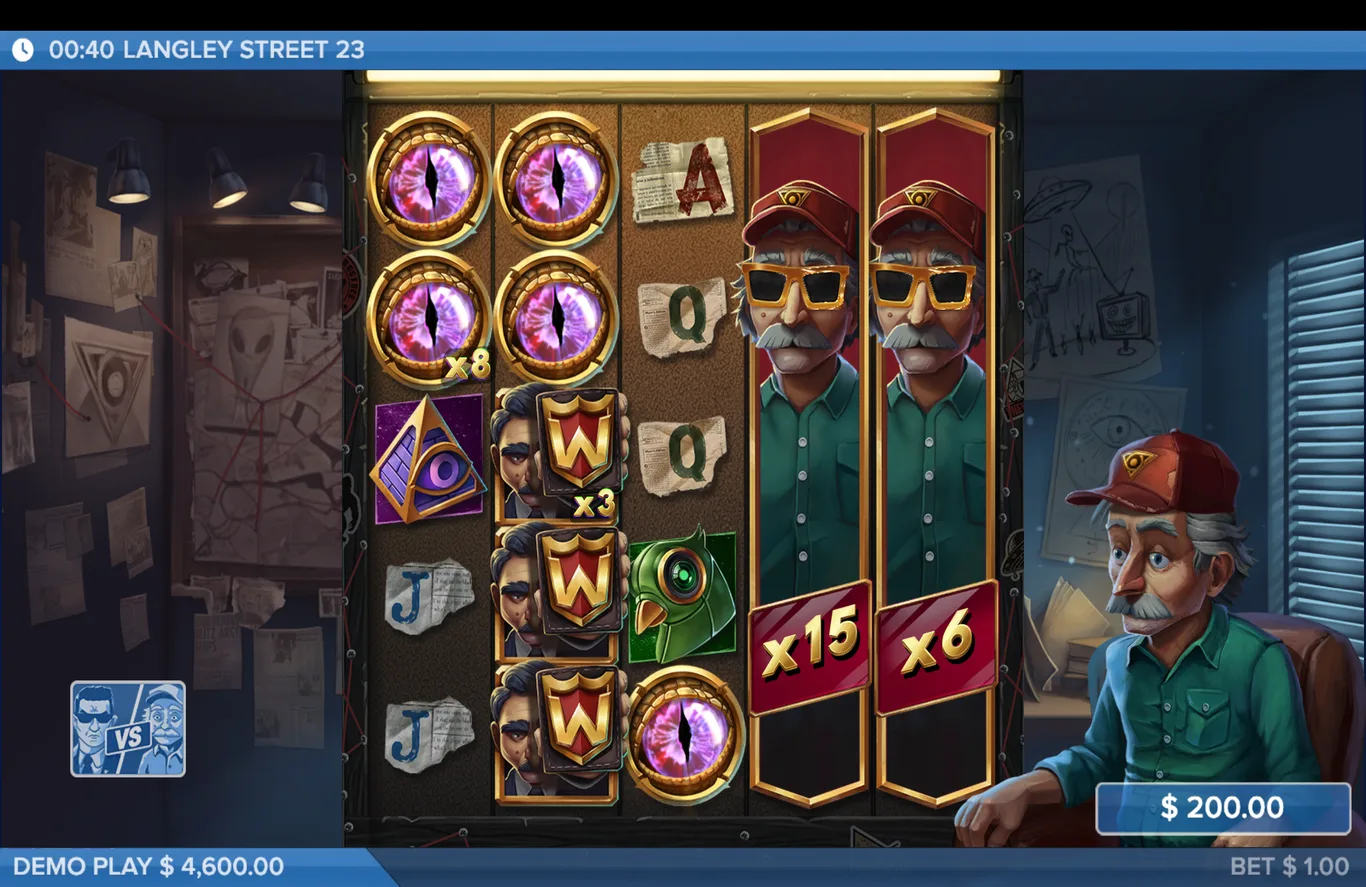
Base game spin showing multiple wild symbols with x8, x15 and x6 multipliers across the reels.
The weight of the return sits in stacked wild multipliers like these, not the frequent small line wins.

Hit frequency and risk profile

The hit frequency is 24%, and - importantly - that rate holds regardless of which RTP configuration the casino runs. Roughly one in four spins lands some kind of win. That sounds generous, but read it alongside the variance: a 24% hit rate on a Med-High game means many of those hits are small, and the paying spins that matter are the feature triggers, not the frequent low-value line wins.

So the practical risk profile is this: a bet that pays back something fairly often, but where the swings between feature runs can be sharp, and your bankroll needs room to absorb the dry patches while you wait for a re-spin chain or free spins to arrive.

A 24% hit rate feels frequent, but on a Med-High game most of the return waits in the features.

What an RTP range can change

Here is the part that trips players up. The 96% is the highlighted standard, but this game ships with a configurable RTP that runs as low as 87% in some market setups. That is a wide spread - nine percentage points between the best and worst versions.

Standard RTP
96%
Lowest configuration
87%
Spread
9 percentage points
Hit frequency
24% (unchanged across builds)
RTP set by
The operator, not the game

The hit frequency does not move with it; 24% stays put whichever configuration is active. What changes is the size of the returns feeding back over the long run. On an 87% build you keep less of your wagering over time, even though wins land just as often, so the difference is felt in the depth of the swings and how quickly a bankroll erodes across a long session - not in how frequently the reels pay.

Because the number is set by the operator, two casinos can offer the identical game at very different returns. There is usually no way to tell from the reels alone which version you are on, so the honest move is to check the game's information panel or the operator's stated RTP before committing real money. If a casino runs the 96% build, that is a genuine edge over one quietly serving 90% or lower.

Before you play for real

Same reels, same 24% hit rate, but an 87% build and a 96% build are not the same bet. Confirm the RTP in the game info or operator terms before playing, and favour a casino running the 96% version.

What the RTP means before you play

Put the figures together and the picture is straightforward. A 96% standard RTP is competitive, the Med-High variance and 7/10 rating mean real swings, and the 24% hit rate keeps something landing often enough to stay engaging while you build toward the VHS-tape features.

A few practical things to settle before you spin for money:

  1. Check the configuration

    Confirm the casino is running the 96% version rather than a lower build, since that single choice moves your long-run return more than any bet-sizing decision will.

  2. Match your stake to the swings

    With a Med-High game you want enough spins in the tank to reach features, so a smaller bet that survives a dry run usually serves better than a big one that empties fast. The stake range runs from 0.20 up to 100 per spin, which leaves plenty of room to play conservatively.

  3. Try it without risk first

    The feature-unlock system takes a few sessions to read, and the free Langley Street 23 demo lets you learn the rhythm of the re-spins and free spins before any money is on the line.

None of these figures beat the house edge, no RTP or strategy does. What they do is let you play the version of the game with the best return, at a stake you can sustain, with clear eyes about the swings you are signing up for.

Learn the swings before you stake

Get a feel for the re-spins and free spins where the return lives, with no money on the line.

Langley Street 23 RTP and volatility: quick answers

What is the RTP of Langley Street 23?

The highlighted standard RTP is 96%. It is configurable, though, operators can run builds as low as 87% depending on the market, so the version you play depends on the casino. Check the game's info panel before committing real money.

How volatile is Langley Street 23?

It is medium-to-high, rated 7 out of 10 on ELK Studios' own volatility scale, with Med-High variance. Expect fairly frequent small wins but bigger, less predictable payouts concentrated in the re-spins and free spins.

What is the hit frequency, and does the RTP setting change it?

The hit rate is 24%, roughly one paying spin in four, and it stays the same whichever RTP configuration the casino runs. Changing the RTP shifts the long-run return, not how often the reels land a win.

Does a higher RTP mean I will win more often?

No. RTP is a long-run average return, not a frequency. On this game the hit rate is fixed at 24% regardless of the RTP build; a higher RTP means more value fed back over time, not more frequent wins.

Keep reading on Langley Street 23